There's a stat doing the rounds that should make anyone relying on a strong LinkedIn presence as their visibility strategy stop and think.
Research published by eMarketer late last year found that fewer than 10% of the sources cited by ChatGPT, Gemini and Copilot also rank in Google's top 10 for the same query. AI search and traditional search are pulling from different pools entirely.
That's not a technical footnote. It's the game changing underneath founders who are still optimising for the old one.
Separately, research into generative engine optimisation this year has found that AI models tend to favour earned, third-party sources — journalism, analyst research and trade press — over brand-owned and social content when deciding what to cite.
Which means the LinkedIn post you spent an hour agonising over is, to a large language model, not particularly useful as evidence. Not because it's bad. Because it's yours. You wrote it, published it and control it — and that's precisely what makes third-party sources more useful when an AI system is assessing credibility.
I want to be careful here. LinkedIn absolutely has value.
It's how a prospect checks you're real. It's how a journalist decides you're worth a callback. It builds the familiarity that makes a cold outreach message land warmer.
What it doesn't do, on its own, is establish the same kind of independent authority when someone asks an AI system who the credible voices in fintech regulation are, or which founders are solving a particular problem.
For that, you want the byline in Finextra. The quote in The Financial Times. The panel appearance somewhere that isn't your own feed.
So why are so many founders pouring their limited visibility budget into the channel AI trusts least?
Partly because LinkedIn is relatively easy.
You control the copy, the timing and the whole production process. PR is slower, messier and depends on at least two other people: whoever is doing your PR, and a journalist deciding your story is worth telling.
Founders like control. I understand that. I'd probably like it too.
But easy and effective aren't the same thing.
And the gap between the two is only becoming more important.
Every month you spend building visibility purely through owned content is another month without the third-party evidence that can strengthen your credibility across search, AI and the people actually making buying decisions.
Earned media has a long tail
The old saying that the news is tomorrow's fish and chip paper doesn't really apply to online media.
If you were quoted in a relevant article in 2015, there's a good chance that article is still online today — potentially appearing in search results, being linked to by other sites and contributing to how you and your expertise are perceived.
LinkedIn is different.
Stop posting and your visibility drops quickly. Your best posts disappear down the feed. Your audience moves on.
Earned media can keep working long after the original story has been published.
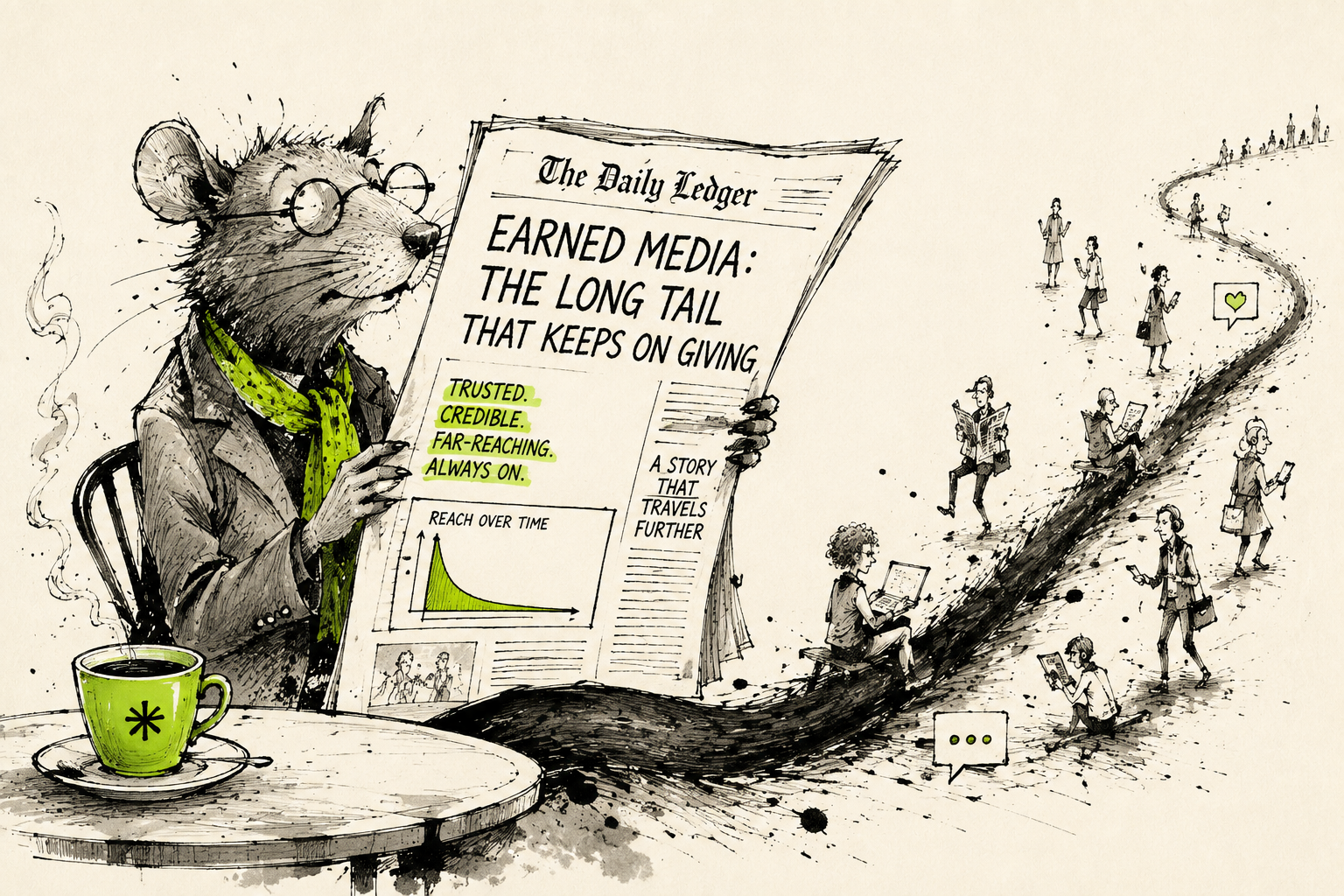
That's the real value.
You're not just borrowing someone else's audience for a day. You're creating a piece of third-party evidence that can keep establishing your credibility for years.
The founders who'll be discoverable in three years are the ones treating LinkedIn as the warm-up act and earned media as the headline.
Not the other way round.